
In the fast-paced realm of oil and gas automation, securing reliable power is an operational necessity. Operators must choose between grid-tied, off-grid, and hybrid systems to keep facilities running smoothly. Selecting the optimal power configuration minimizes downtime and maximizes profitability. Let us explore these three primary options to help determine the best fit for your unique industrial needs.
Grid-Tied vs. Off-Grid vs. Hybrid: Understanding Your Power System Options
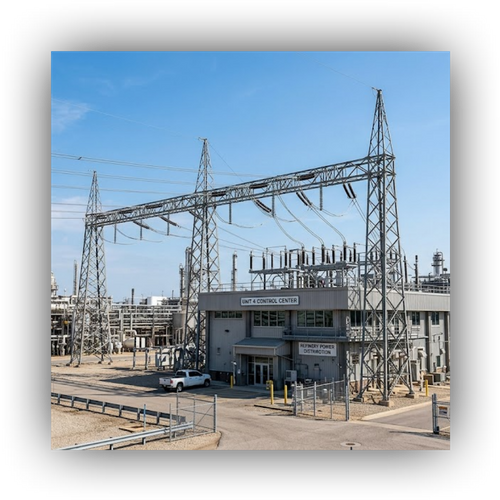
The Reliability of Grid-Tied Systems
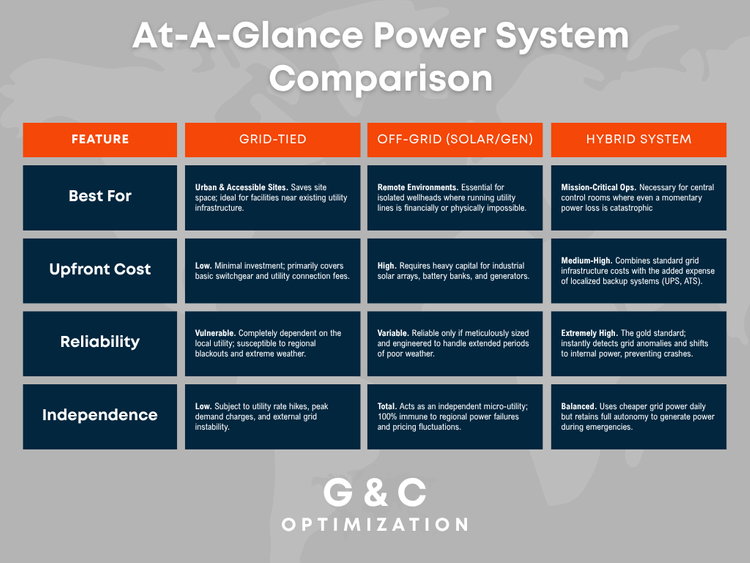
Grid-tied power systems connect directly to the local utility grid. For facilities near established infrastructure, this is often the most cost-effective approach. Because you draw power continuously from the utility, you avoid massive on-site battery banks. However, reliance on the main grid means operations are vulnerable to regional blackouts, which can halt critical processes if a backup plan is not in place.
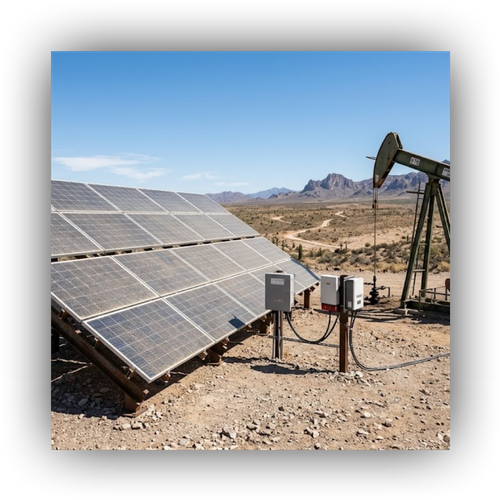
Embracing Independence with Off-Grid Solutions
When your operations are stationed in remote, harsh environments, traditional grid access is rarely an option. Off-grid systems rely entirely on independent generation, often utilizing industrial solar solutions or localized generators. These setups ensure that distant well pads remain powered regardless of grid availability. By harnessing renewable energy alongside battery storage, off-grid configurations provide total energy independence, requiring careful sizing to handle peak loads.
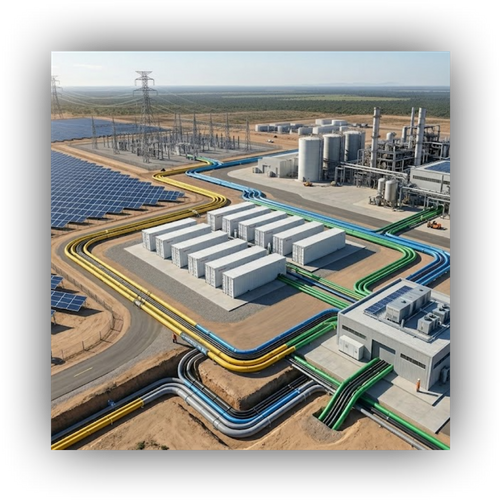
The Best of Both Worlds: Hybrid Systems
A hybrid power system combines the stability of grid connectivity with the resilience of independent generation. In these setups, facilities utilize grid power for daily operations but incorporate backup generators or solar arrays. If the grid fails, the system seamlessly shifts to its secondary power source. This versatility is ideal for mission-critical facilities where even a momentary loss of power could lead to catastrophic equipment failures.
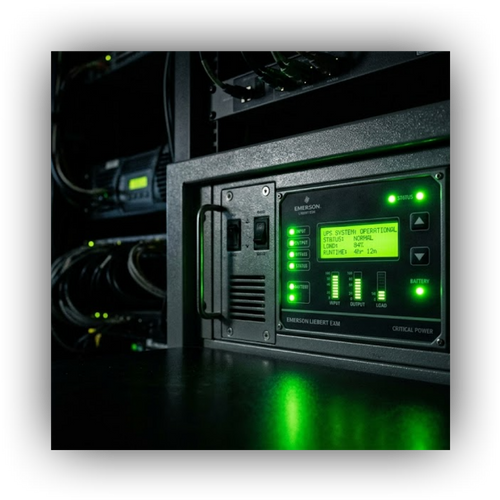
Safeguarding Operations with an Uninterruptible Power Supply
Regardless of whether you choose grid-tied or hybrid configurations, power quality anomalies can wreak havoc on sensitive industrial control equipment. Integrating an uninterruptible power supply (UPS) acts as a vital bridge during power transitions. A high-quality UPS cleans incoming power, preventing surges from damaging delicate SCADA components, and provides immediate battery backup to keep systems online until secondary generators engage.
Selecting the Right Fit for Your Facility
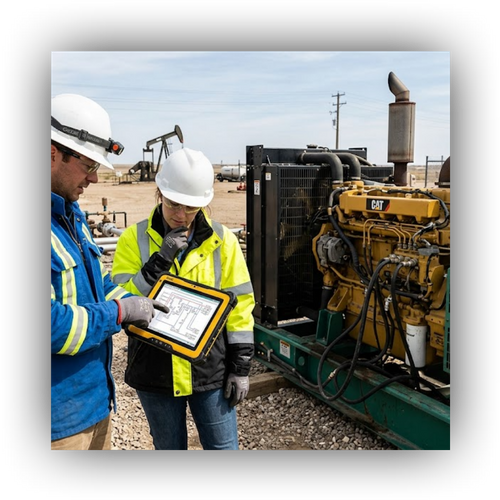
Determining the ideal power system requires a comprehensive analysis of your location, power demands, and budget. Remote oilfields naturally gravitate toward off-grid setups, while urban-adjacent refineries might lean toward grid-tied setups. Carefully evaluating your risk tolerance for downtime and your long-term expansion plans will guide your decision. A thorough energy audit ensures your chosen system accommodates current automation needs while leaving room for future upgrades.
Power Your Operations with Confidence
Ready to optimize your facility's energy infrastructure? At G&C Optimization, we specialize in designing and implementing resilient power strategies tailored for the demanding energy sector. Whether you need a robust UPS or a custom off-grid setup, our experts are here to help. Contact G&C Optimization today to ensure your operations remain powered, protected, and consistently profitable.