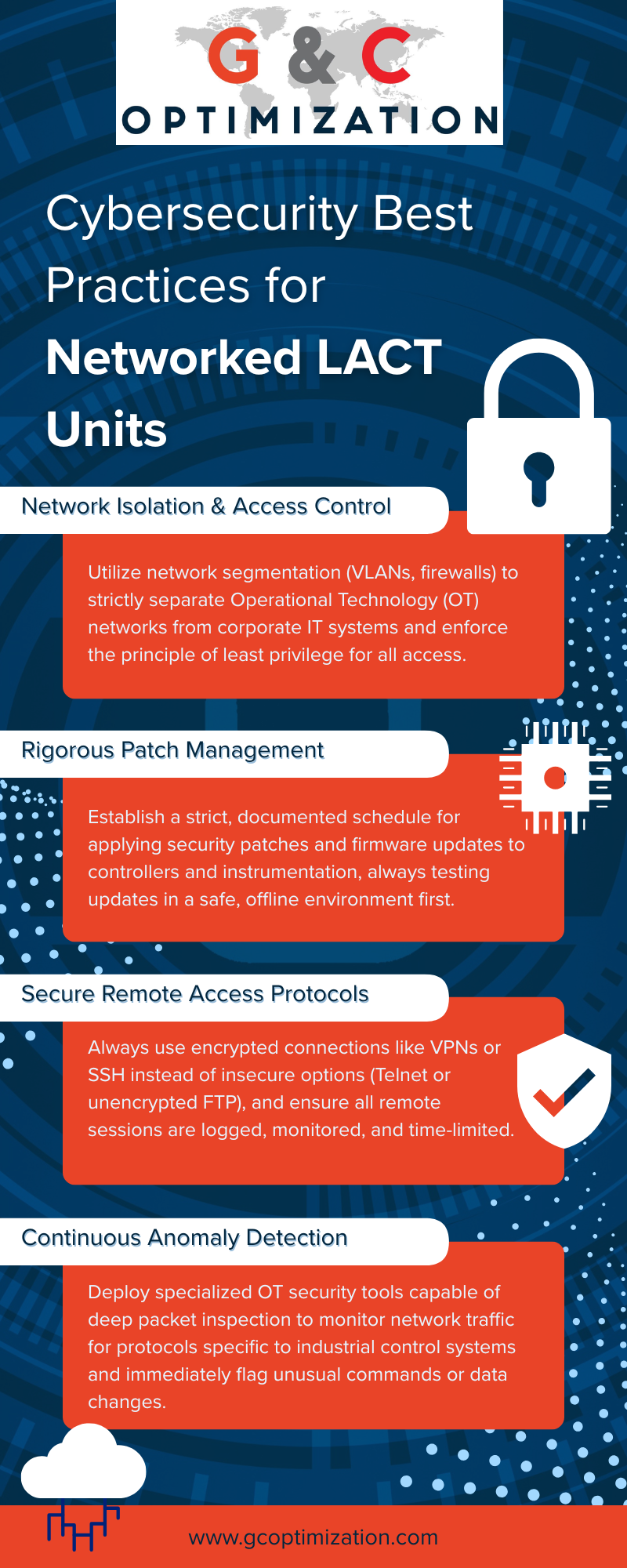
In modern oil and gas operations, the Lease Automatic Custody Transfer (LACT) unit is a sophisticated, networked system. These units, which handle the high-value transfer of crude oil, are no longer isolated; they are integrated with SCADA, enterprise resource planning (ERP) systems, and remote monitoring networks used by pipeline operators and terminal operators. While this integration provides efficiency and real-time data, it also introduces significant cybersecurity risks. Learn more from G&C Optimization today.
Securing Your Flow: Cybersecurity Best Practices for Networked LACT Units

Implement Network Segmentation and Access Control
Do not connect your LACT meter system directly to the corporate IT network. Utilize network segmentation (e.g., VLANs, firewalls) to isolate the Operational Technology (OT) network from the Information Technology (IT) network. Implement the principle of least privilege: only necessary ports should be open, and access to the unit’s controllers and HMIs (Human-Machine Interfaces) should be restricted solely to authorized terminal operators and maintenance personnel using multi-factor authentication.

Rigorous Patch Management and Firmware Updates
The controllers and embedded operating systems within LACT meter units and accompanying instrumentation (like flow computers and analyzers) often require patches to address known vulnerabilities. Establish a strict, documented schedule for applying these security patches and firmware updates. While downtime is a concern, the risk of a zero-day exploit exploiting unpatched software is far greater. Always test patches in a safe, offline environment before deployment.

Secure Remote Access Protocols
Remote monitoring and control are essential for pipeline operators, but they are a major attack vector. Avoid using insecure protocols like Telnet or unencrypted FTP. Instead, use Virtual Private Networks (VPNs) with strong encryption, Secure Shell (SSH), or Industrial DMZs (Demilitarized Zones) to manage remote connections. All remote sessions must be logged, monitored, and time-limited, with stringent password policies enforced for all accounts.
Continuous Monitoring and Anomaly Detection
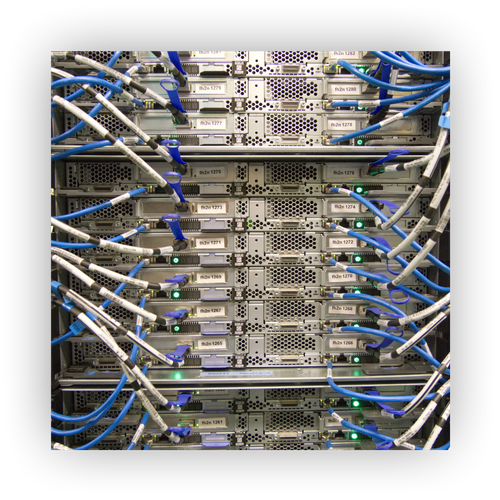
Traditional firewalls only block external threats. Advanced threats often involve internal movement or subtle data manipulation. Deploy specialized OT security tools capable of deep packet inspection to monitor network traffic for protocols specific to industrial control systems (like Modbus or OPC UA). These tools can detect anomalies—such as an unauthorized command being sent to the LACT meter controller or unusual changes in flow data—and flag them immediately for incident response.
Data Integrity Checks and Audit Logs
The integrity of the custody transfer data is the ultimate asset to protect. Ensure that the LACT meter flow computer maintains unalterable, chronological audit logs of all configuration changes, calibration events, and user accesses. Regularly back up this data and compare it against secondary systems. This ensures that any malicious modification of volume or quality readings can be immediately identified and reversed, protecting the financial relationship between trading parties.
Cybersecurity is not just an IT problem; it is an operational risk for every terminal operator and pipeline operator. Contact G&C Optimization to learn more.