In the high-stakes world of energy production, operators constantly strive for absolute precision. However, a fundamental truth exists within oil and gas automation: the "perfect" measurement is entirely a myth. Every meter, sensor, and gauge possesses an inherent degree of uncertainty. Recognizing, quantifying, and managing this uncertainty is not a sign of weakness, but a critical component of ensuring profitability and overall process integrity.
The Myth of the 'Perfect' Measurement: Understanding and Managing Uncertainty

Defining Measurement Uncertainty
Measurement uncertainty is not the same as an error; it is the quantification of the doubt surrounding a measured value. Environmental factors, fluid dynamics, and mechanical wear contribute to this variance. In oil and gas measurements, a reading of 100 barrels might actually represent a true volume between 99 and 101 barrels. Acknowledging this statistical variance is the first step toward better data management.

The Financial Impact of Variance
Ignoring measurement uncertainty can have severe financial repercussions. In custody transfer applications, even a fraction of a percent in discrepancy can translate to millions of dollars gained or lost annually. By implementing strategic performance management practices, companies can accurately track these minor variances. This proactive approach ensures that financial forecasting remains realistic and that commercial transactions are based on statistically sound, defensible data.
Calibration and Equipment Health
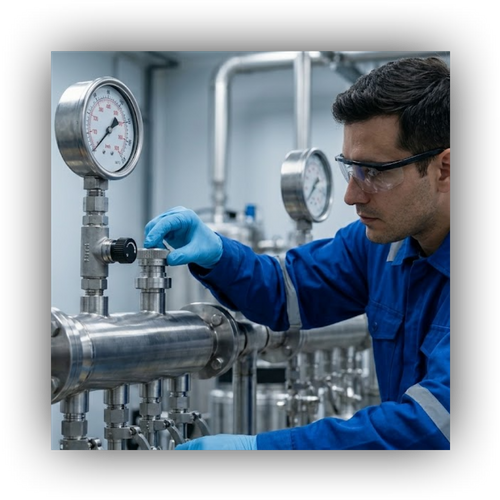
Regular calibration is the strongest defense against excessive measurement drift. While you cannot eliminate uncertainty, routine maintenance keeps it within acceptable, documented tolerances. Advanced automation systems can now monitor meter health in real-time, alerting technicians when a device begins to drift outside its calibrated baseline. This predictive maintenance model prevents prolonged periods of inaccurate data collection, safeguarding the integrity of your operational reporting.

Standardization and Regulatory Compliance
The oil and gas industry is heavily regulated, with strict standards governing measurement accuracy and reporting. Organizations like the API and AGA provide frameworks for calculating and declaring uncertainty. Adhering to these established standards is crucial for maintaining operational licenses and avoiding hefty fines. Transparent reporting of measurement uncertainty demonstrates a commitment to ethical business practices and builds unwavering trust with partners and regulatory bodies.

Leveraging Software for Better Accuracy
Today, sophisticated software platforms play a pivotal role in managing measurement uncertainty. These systems automatically gather data from field devices, apply complex correction algorithms, and generate comprehensive uncertainty reports. Integrating these digital tools into your strategic performance management framework removes human error from complex calculations. It empowers engineers to continuously refine measurement stations, ultimately driving down variance and optimizing production lifecycle efficiency.
Master Your Measurement Accuracy
Stop chasing the illusion of a flawless reading and start effectively managing your measurement uncertainty. At G&C Optimization, we provide comprehensive solutions to enhance the reliability of your field measurements. From advanced automation integration to rigorous calibration strategies, our team ensures your data is both accurate and actionable. Contact G&C Optimization today to optimize your measurement processes and protect your bottom line.